Tour-At-A-Glance
Day 1 – Saturday: Hotel check-in, Quito
Day 2 – Sunday: Quito City Day Tour. B, L.
Day 3 – Monday: Travel to Galapagos. Embarkation – Lobos Island. B, L, D.
Day 4 – Tuesday: Española: Gardner Bay / Punta Suarez. B, L, D.
Day 5 – Wednesday: Floreana: Post Office Bay / Punta Cormorant. B, L, D.
Day 6 – Thursday: Santa Cruz: Darwin Research Station / Highlands. B, L, D.
Day 7 – Friday: Genovesa: Darwin Bay / Prince Phillip’s Steps. B, L, D.
Day 8 – Saturday: Bartolome / Santa Cruz: Punta Bowditch. B, L, D.
Day 9 – Sunday: Santa Cruz: Cerro Dragón / Bachas Beach. B, L, D.
Day 10 – Monday: Santiago: Buccaneer Cove / Puerto Egas. B, L, D.
Day 11 – Tuesday: Isabela: Punta Vicente Roca / Fernandina: Punta Espinosa. B, L, D.
Day 12 – Wednesday: Isabela: Urbina Bay / Tagus Cove
Day 13 – Thursday: Santa Cruz: Black Turtle Cove / Giant Tortoise Reserve, transfer to hotel in Puerto Ayora. B, L, D.
Day 14 – Friday: Free day in Puerto Ayora – finding your land legs. Farewell dinner. (B, D)
Day 15 – Saturday: Transfer to Baltra airport, flight back to the continent, where your trip with us ends. (B)
* Indicates visitor sites that are restricted to visits by small cruise ships only.
B = Breakfast, L = Lunch, D = Dinner.
DAY 1
SAN CRISTOBAL ISLAND: AIRPORT / LOBOS ISLAND
AM: San Cristobal Island: Airport
PM: San Cristobal Island: Lobos Island
In the morning, you fly from Continental Ecuador to San Cristobal Island. A Monserrat Yacht guide welcomes you in Galapagos and escorts you to the yacht.
After lunch, get ready for an exciting hike and snorkeling time during the afternoon.
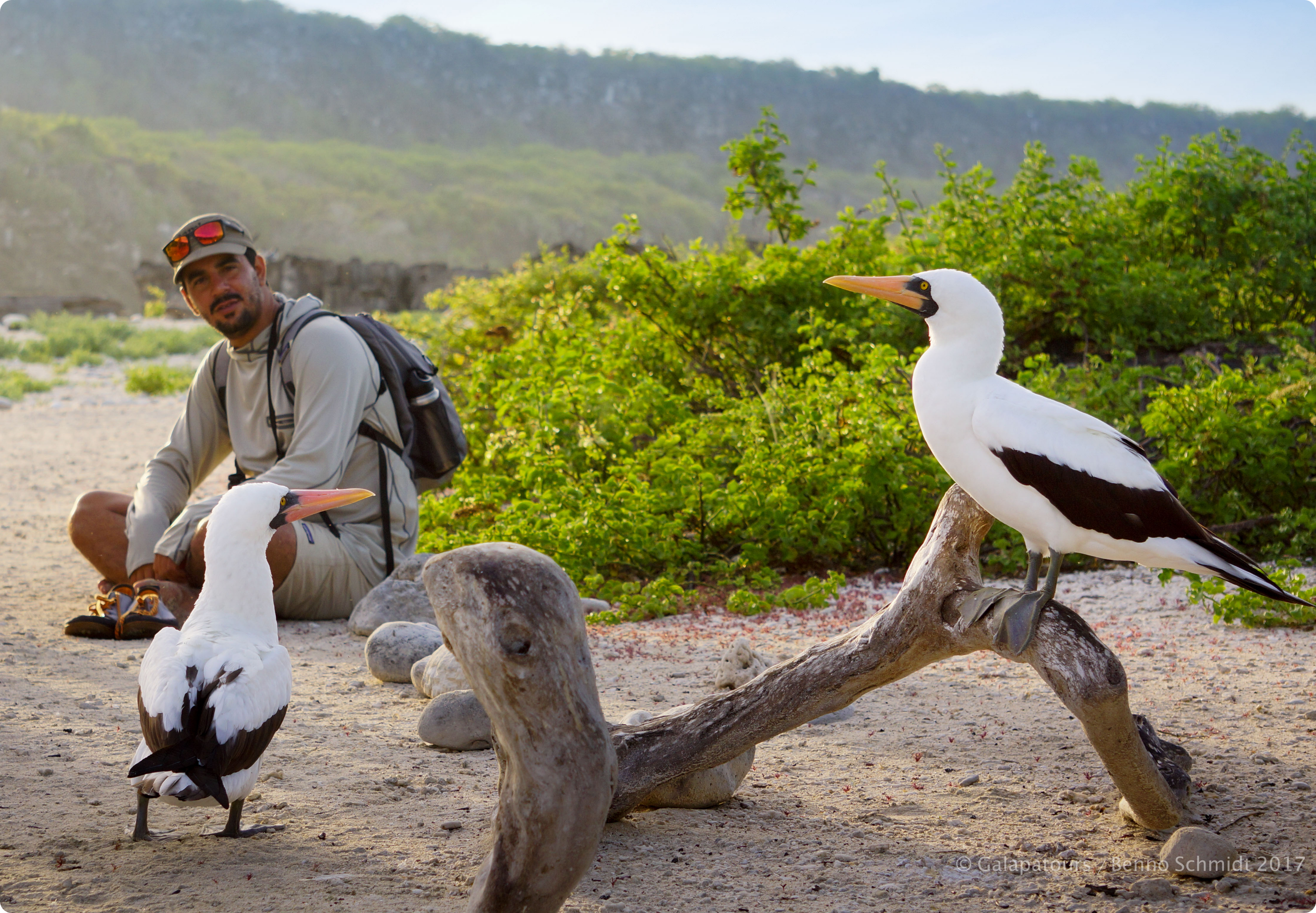
First, you are surprised by the variety of wildlife inhabiting this tiny island, as you explore it by foot. You can observe blue footed boobies, frigate birds, fur seals, and sea lions on land.
Afterwards, you jump on a panga for a ride to view the sea and shore birds nesting and feeding, from a different perspective.
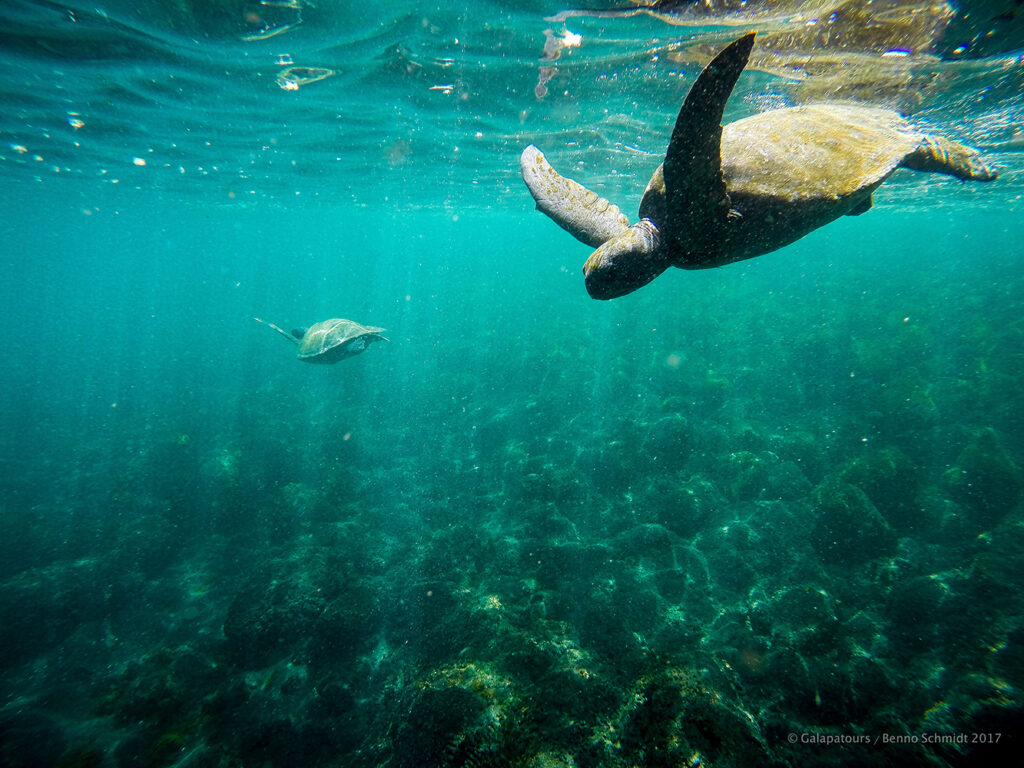
Finally, you jump in the water for a close encounter with marine wildlife. Honouring its name, families of playful sea lions and their inquisitive pups swim with you. You also observe fur seals, sea turtles, rays, and tropical fish.
DAY 2
ESPANOLA ISLAND: GARDNER BAY/ SUAREZ POINT
AM: Espanola Island: Gardner Bay
PM: Espanola Island: Suarez Point
As you land on Gardner Bay’s white-sand beach, you are greeted by the sight of sunbathing sea lions and marine iguanas. The naturalist guides lead a 2-mile hike on a trail taking you up around the cliffs. During it, you observe Galapagos finches and mockingbirds flitting among the vegetation. You also learn about the geological formation of the Galapagos.
After the hike, you get back on the Monserrat and get ready to jump in the water. You head to Tortuga Rock for a spectacular snorkelling time. Spot young sea lions and large schools of surprisingly big tropical fish, including yellow-tailed surgeonfish, king angelfish, and bump-head parrot fish. Look for white-tipped reef sharks napping on the bottom of the sea.
After lunch, you sail to Punta Suarez, on the western side of the island. This is one of the richest wildlife landing sites in the Galapagos. Surfing young sea lions welcome you upon your arrival at this site. Then, you head the trail to find a wide variety of nesting seabirds, and during the right season, observe the magnificent waved albatrosses. Finally, you follow the path up to a cliff for great views over the ocean. You also observe there the famous Espanola Blowhole and watch sea birds gliding in the wind.
DAY 3
FLOREANA ISLAND: CORMORANT POINT/ POST OFFICE BAY
AM: Floreana Island: Cormorant Point
PM: Floreana Island: Cormorant Point
You disembark at a golden-greenish beach rich in olivine crystals. Then, you hike inland to a brackish lagoon hosting a variety of migratory and coastal birds. Its most illustrious guests are the Galapagos Flamingos. The trail continues to the contrasting “flour beach”, a beautiful white-sand beach resulting from pulverized corals. This is one of the most important nesting sites for sea turtles and also a great one to spot sea turtles, blue-footed boobies plunging into the water, and small reef sharks floating along the shoreline in search of food. After observing this, you return to our landing spot where we can rest, swim, or snorkel. Sea turtles, reef fish, and white-tipped reef sharks are some of the species swimming in these waters. A small colony of penguins also resides on Floreana, so you can sometimes observe them as well.
Later in the morning you go to Champion Islet for a wonderful snorkeling session. A playful sea lion colony resides in the waters along sea turtles, rays and colorful fish. There can be currents in this area, this activity should be done by strong swimmers only.
Post Office Bay is a unique visitor’s site because it gives you a different perspective of the Galapagos, the human side of the archipelago in the years. You land on the beach and make your way to the site to learn about its importance and tradition.
DAY 4
SANTA CRUZ ISLAND:CHARLES DARWIN STATION / HIGHLANDS
AM: Santa Cruz Island: Charles Darwin Research Station Visit
PM: Santa Cruz Island: Highlands
In the morning, you visit a very important institution, responsible for leading the conservation of Galapagos and the protection of its emblematic species: the Charles Darwin Research Station. You learn about the efforts to preserve this natural heaven led by scientists, researchers, and volunteers. In addition, you observe many species of tortoises and land iguanas in captivity. You can observe the famous Galapagos tortoise up close after they were brought back from the brink of extinction. A corral houses adult tortoises, and a nursery cares for the young until around age three when their shells have hardened.
In the afternoon, you visit the highlands of Santa Cruz to observe the Galapagos giant tortoise in its natural surroundings. Explore the area and its incredible underground lava tunnels – some are more than 1 km (.6 mi) long! Wander along the volcanic tubes and keep an eye out for the (mainly) nocturnal barn owls that sometimes roost here.
DAY 5
GENOVESA ISLAND: DARWIN BAY / EL BARRANCO
AM: Darwin Bay
PM: Prince Phillips’s Steps
Genovese Islands is a paradise for bird-lovers, and you discover it on this day! Darwin Bay was formed by the collapse of the flooded caldera of Tower Island, another name used for Genovesa. After landing at a small sand and coral beach, you realize why this island is paradise for bird-lovers. Swallow-tailed and lava gulls, mockingbirds, yellow-crowned night and lava herons welcome you to it along with Galapagos doves and yellow warblers. Then, you follow a short and flat trail to encounter red-footed booby and great frigatebird nests. The path continues to a tidal lagoon where sea lions swim playfully. It ends on a cliff with magnificent views of this remote part of the Galapagos.
After the land excursion, you enjoy free time to relax on the beach, snorkel in the calm, clear waters, or kayak. Darwin Bay offers some of the best Galapagos snorkeling on the islands with sea lions, green sea turtles, sharks, and manta rays. Schools of colorful fish including surgeonfish, butterfly hogfish, unicorn fish, king angelfish, and parrot fish complete this fascinating underwater world. However, the real bucket list highlight is the opportunity to cross paths with Scalloped Hammerhead sharks that sometimes frequent this tranquil bay.
Prince Phillips’ Steps, also known as El Barranco,was named after a visit by the British Monarch in 1964. El Barranco’s steep 81-foot stairway leads up to a high cliff-face that opens out onto the plateau surrounding Darwin Bay. It offers an amazing view. Once at the top of the stairway, you meet Nazca and red-footed boobies, mockingbirds, and finches along the way of a palo santo trail. It will also be possible to see wedge-rumped storm-petrels and short-eared owls.
DAY 6
BARTOLOME ISLAND/ SANTA CRUZ ISLAND: BOWDITCH POINT
AM: Bartolome Island
PM: Santa Cruz Island: Bowditch Point
Bartolome’s land excursion takes you to a summit offering a picturesque landscape of the pinnacle rock and the bays around it. It is a great place to take a picture that records this adventure for the future. As you hike up a wooden boardwalk, you have a strong perspective of the islands’ not-too- distant volcanic origins.
When you come back from the summit, you have time to swim and snorkel around pinnacle rock. This is one of the best places to observe Galapagos penguins in the water along with sea turtles and a huge variety of fish. This makes Bartolome and its surrounding waters a fantastic place to explore the natural wonders of the Galapagos.
In the afternoon, you will visit one of the last off-the-beaten-path sites in the Galapagos Islands. Only a couple of cruises visit Bowditch Point. This pristine site offers you a great snorkeling session with giant schools of black-striped salema, parrotfish, and Mexican hogfish, or you can enjoy kayaking or SUP if you prefer. Afterwards, you spend time on the beach relaxing or walking around it.
DAY 7
SANTA CRUZ ISLAND: BACHAS BEACH / DRAGON HILL
AM: Bachas Beach
PM: Santa Cruz Island: Dragon Hill
Bachas Beach sand is made of decomposed coral, making it soft and white, and a favorite site for sea turtles’ nesting. You can spot abundant Sally Lightfoot crabs on the lava rocks along the water’s edge as you walk on the beach. If you continue on it, you can see unique wildlife including flamingos, hermit crabs, black necked stilts, and sea lions.
You can also swim or snorkel off Bachas Beach. These activities enable you to spot all sorts of marine wildlife in its shallow waters and tidal pools.
Black Turtle Cove Excursion (AM)
Black Turtle Cove
Explore the mangroves by panga to find rich marine wildlife between the fresh and salt waters. Keep any eye out for manta rays and sea turtles in this tranquil ecosystem. Whitetip reef sharks can also be seen gliding by.
In the afternoon, you visit Dragon Hill, on the west coast of Santa Cruz Island, to see land Iguanas and a saltwater lagoon frequented by flamingos and other species of birds. A short walk from the beach takes you to a hypersaline (saltier than the ocean) lagoon frequented by pink flamingos, common stilts, pintail ducks, and other species of birds. On the way, you pass through a Scalesia tree forest. This is an endemic species to the area and is very important as there are only 400 specimens of Scalesia trees left in the world.
DAY 8
SANTIAGO ISLAND: BUCCANEER COVE/ EGAS PORT
AM: Santiago Island: Buccaneer Cove
PM: Santiago Island: Egas Port
Santiago Island has it all: human history, wildlife, and volcanic eruption traces. In the morning, you jump into the panga with directions to Buccaneer Cove and cruise alongside high cliffs and rock formations where you can spot hawks, owls, and sea birds like blue footed boobies. This site was home to illustrious visitors. Pirates considered it a favorite hideout while looking for the right place to stock up their boats with food and water. Charles Darwin also camped at this site with land iguanas for nine days in 1835. You can spot sea lions relaxing on the beach and sea birds nesting in the cove. There is a lot to see at this site.
Puerto Egas, also known as James Bay, offers you three trails to choose from. The first one goes along the shore and hosts a great number of shore birds such as wader birds, and lava, yellow-crowned, and great blue herons, and reptiles like marine iguanas. The beach area is home to a plethora of wildlife. The main attraction on this trail is Galapagos Fur Seal grottos. The coastal trail also passes many tidal pools which are often filled with interesting marine life.
The second trail leads to the old salt mines and a volcanic crater. There, you find a saltwater lagoon, which dries into salt flats in summer. Flamingos and pintail ducks are common visitors when the brackish waters are full of tasty crustaceans.
The third option leads inland past another brackish lagoon with flamingos and wading birds. The path continues into the more arid habitat of palo santo trees onto ancient lava flows.
The guides choose the trail to explore based on weather and status of the site.
Puerto Egas also gives you wonderful snorkeling opportunities. The underwater action here is fabulous. Highlights include fur seals, colorful reef fish, eels, whitetip reef sharks, sea turtles, and seahorses.
DAY 9
ISABELA ISLAND: VICENTE ROCA POINT / FERNANDINA ISLAND: ESPINOSA POINT
AM: lsabela Island: Vicente Roca Point
PM: Fernandina Island: Espinoza Point
You discover the fascinating underwater world of Vicente Roca Point. This site offers great deep-water snorkeling sessions at one of the richest marine havens on Earth (Bolivar Channel). Some of the species that you observe include sea green turtles, sharks, and rays. You also take a dinghy ride along the coast to observe a great diversity of sea and coastal birds including Nazca and blue-footed boobies, noddies, brown pelicans, penguins, and flightless cormorants.
Located on Fernandina Island, this is one of the most pristine islands in the world, with no human-introduced species to date, and the youngest of the Galapagos Islands. A barren jet-black landscape of lava greets you upon your arrival.
As you land, you find tidal pools with abundant marine wildlife including small fish and mollusks. Sea turtles or rays are sometimes trapped in these pools as well. A little further ahead, you pass by large colonies of marine iguanas and sea lions. The trail continues to a site where flightless cormorants have their nests. This remarkable bird is only found in western Galapagos, and experts estimate that they may only be a few hundred individuals in total.
DAY 10
ISABELA ISLAND: URBINA BAY/ TAGUS COVE
AM: lsabela Island: Urbina Bay
PM: lsabela Island: Tagus Cove
Urbina Bay is located on the western side of lsabela, and it came to be as the shallow sea bottom uplifted in 1954, showing a large coral reef sticking up above sea level. Because of this, Urbina Bay is one of the newest features in the Galapagos. It offers you a spectacular view of the Alcedo volcano.
You cover a long trail starting on the beach. During this hike, you observe wild Galapagos Giant Tortoises and Galapagos Land Iguanas. As the trail circles back towards the shore line you come across colonies of the unique Galapagos Flightless Cormorant.
Following the excursion, you jump in the water for a fun snorkeling session surrounded by Galapagos Penguins, Galapagos Marine Iguanas, sea turtles, rays, and reef fish.
Tagus Cove is another site of human history and wildlife for an exciting excursion. Whalers and pirates, a british ship, and Charles Darwin are some of the illustrious visitors to Tagus You witness how graffiti has been carved into the rock walls by visitors over the past centuries.
The activities and tours at this site are determined based on time and itinerary. One option is an exciting panga ride to observe the wildlife around the cove. You observe Galapagos penguins and Flightless Cormorants along with many other seabird species.
If you make a landing, you trek up to Darwin’s Lake. The trail leads through Palo Santo forest up to a brackish water lake that botanist Charles Darwin himself visited in 1835. Along the way, you find a wonderful lookout point with fine views over the bay and surrounding islands. Along the path, you can observe Galapagos finches, hawks, warblers and flycatchers.
If there is enough time, you can also jump in the water for a joyful snorkeling session with colorful fish, sea turtles, eagle rays, and reef sharks.
DAY 11
SANTA CRUZ ISLAND: BLACK TURTLE COVE / BALTRA AIRPORT
AM: Santa Cruz Island: Black Turtle Cove Excursion
This site can only be visited on a panga ride. It navigates into the cove to explore one of the most pristine sites on the archipelago. As you enter the area surrounded by mangroves, you need to start looking for rich marine wildlife between the fresh and salt waters. Some of the species inhabiting the shallow waters of this site include manta rays, sea turtles, and whitetip reef sharks.
AM: Baltra Airport
Following the panga ride to Black Turtle Cove, the cruise takes you to the Baltra island pier where you disembark. Then, the naturalist guide escorts you to the airport for your flight to Continental Ecuador.